


OUR APPROACH
A more thoughtful way to choose closures
There is no universal “best” material. The right solution depends on how a closure is made, how it performs, how it is collected after use, and how realistic its end-of-life route really is.
Our role is to help brands navigate those choices with clarity — without oversimplifying the trade-offs.

CLARITY FIRST
Using the right words matters
To avoid vague claims and misleading assumptions, we rely on precise definitions when discussing more responsible packaging choices.
Renewable
A material derived from a resource that regenerates naturally over time.
Biosourced
A material whose carbon content originates from biomass rather than fossil resources.
Biodegradable
A material that can be broken down by microorganisms into natural elements under specific conditions.
Compostable
A material that biodegrades under defined composting conditions, whether industrial or, in some cases, home composting.
Recyclable
A material that can be collected, sorted and reprocessed within existing recycling systems at meaningful scale.
Important
Biosourced does not imply biodegradable.
Biodegradable does not mean compostable in natural environments.
THREE PATHWAYS
How we approach more responsible closure design



SELECTED MATERIALS
Examples of the material logic behind our approach
We evaluate materials not only for what they are, but for how they behave across the full lifecycle of a closure.
Natural cork
Natural cork remains one of the reference materials for premium spirits closures. It is renewable, biosourced and compostable, while cork oak forests also act as valuable long-term carbon sinks. It combines technical relevance, strong brand perception and a naturally low-plastic profile.

FSC-certified wood & reclaimed hardwood
FSC-certified wood supports responsible forest management, while reclaimed hardwood helps reduce new raw material extraction. These materials bring warmth, tactility and authenticity to premium closures while supporting more thoughtful sourcing strategies.

Glass
Glass offers a plastic-free and chemically inert solution. Its sustainability advantage comes less from renewability than from durability, inertness and recyclability within mature recovery systems.

Aluminium & tin
Aluminium and tin can support more circular packaging models thanks to their recyclability. Their environmental relevance depends on sourcing, processing and real recycling efficiency, but they remain strong options for closures where premium finish and recoverability matter.

Micro cork
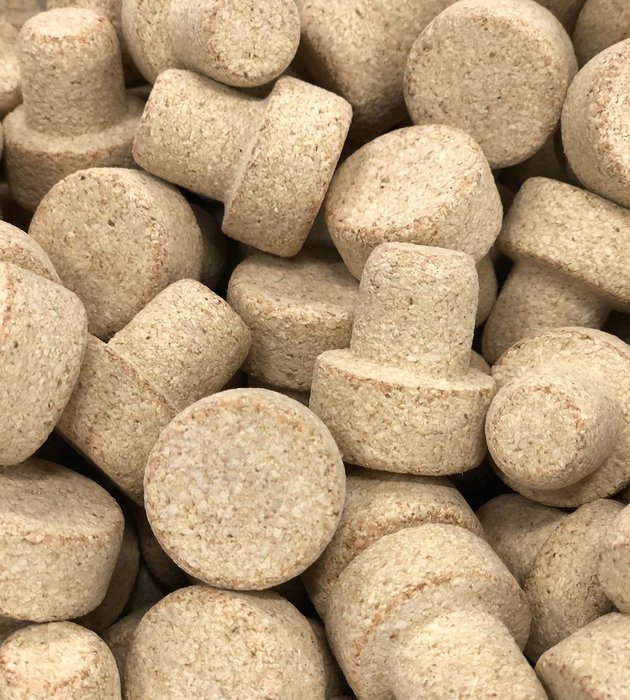
Made from recovered cork material, micro cork extends the life of a renewable resource while preserving a premium tactile experience. It supports a more circular use of natural material streams without losing category relevance.
Bio-PE, PLA & PHA
These materials are all biosourced, but they do not solve the same problem. Bio-PE is often the most practical option when the goal is lower fossil dependence with recyclability. PLA is more relevant in controlled composting systems. PHA offers interesting potential when end-of-life leakage is a concern.

There is no single “most sustainable” material.
A responsible closure decision is rarely about one isolated claim. It is about finding the right balance between material origin, technical performance, recyclability, carbon footprint, available infrastructure and the reality of how the product will be used and disposed of.
What matters most is not a label in isolation, but the overall fit between the closure, the product and the real-world system around it.



CERTIFICATIONS & COMPLIANCE
Built with recognised frameworks in mind
Responsible packaging choices also need to be technically and legally reliable. Where relevant, our approach is supported by recognised sourcing and compliance frameworks, including FSC-certified wood sourcing, food-contact requirements aligned with closure applications, and carbon-related offsetting initiatives.




Looking for the right balance for your project?
Whether your priority is lower plastic content, better circularity, renewable sourcing or a more future-facing closure concept, we can help you evaluate the right options for your product and positioning.