7 min read
Written by
Published the
Introduction
There is a conversation that happens in almost every distillery, usually somewhere between finalising the liquid and briefing the label designer. Someone picks up the prototype bottle and asks: "So what are we doing for the closure?"
And then it gets complicated.
The closure is not just a functional detail. It is the first physical interaction your customer has with your product. It shapes perception before they have poured a single drop. And it has real technical consequences for your liquid, your bottling line, and your market positioning.
This guide is for distillers who know their spirit inside out. Here, we focus on helping you think through the closure decision with the same rigour you apply to production.
Understanding Your Options: The Four Closure Families
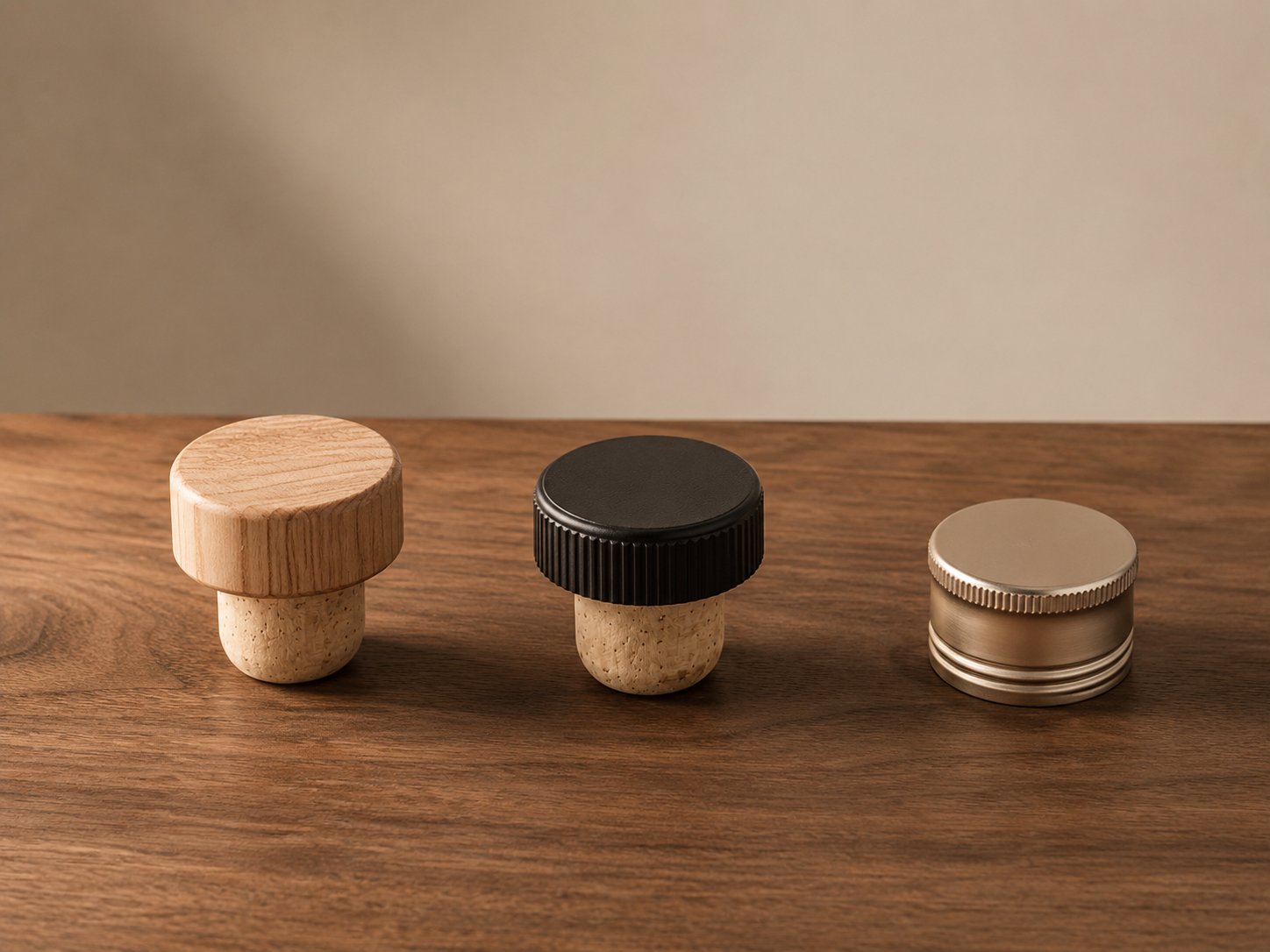
Before diving into spirit categories, it helps to know the landscape. There are four main closure families in spirits packaging:
T-Top Stoppers (Bartop Stoppers)
A T- top consists of a shank - inserted into the bottle neck - paired with a decorative head. Two variants exist:
Classic / Premium T-tops: The head can be wood, resin, aluminium, glass or other materials on request, personalised with custom colours and shapes, laser engraving, embossing, debossing, side branding, coin inserts, rings or collars. The shank can be natural cork, synthetic cork or micro-granulated cork.
Monoshanks (One-Piece Stoppers): Moulded in a single piece of thermoplastic or cork composite, offering a clean minimal profile. Can be customised with colours, shapes, embossing, debossing and side branding.
ROPP Closures (Roll-On Pilfer Proof)
Aluminium caps applied under pressure, forming their own threads against the bottle neck during capping. Tamper-evident by design, compatible with high-speed automated lines, and offering strong branding options, customisable in material, texture, colour, finish, proportions and top/side/insert branding.
GPI Closures (Continuous Thread Caps)
Pre-threaded screw caps - plastic or metal - that screw onto a matching thread finish on the bottle. Reliable, resealable and cost-effective. Fully customisable on material, texture, colour, finish and branding.
Capsules
The decorative sleeve placed over the top of the bottle, often over a stopper or ROPP, adding presentation and tamper evidence. Available in tin, polylaminate, PVC/PET or bio-based/PLA. Customisable with colour matching, embossing, debossing, side branding, printing and hot foil.
These systems are not mutually exclusive. A premium whisky might combine a natural cork T-top stopper with a tin capsule. A craft gin might use a wooden-head bartop with laser engraving. The right combination depends on your spirit, your market and your brand story.
Closure by Spirit Category
Whisky: Heritage Meets Technical Precision
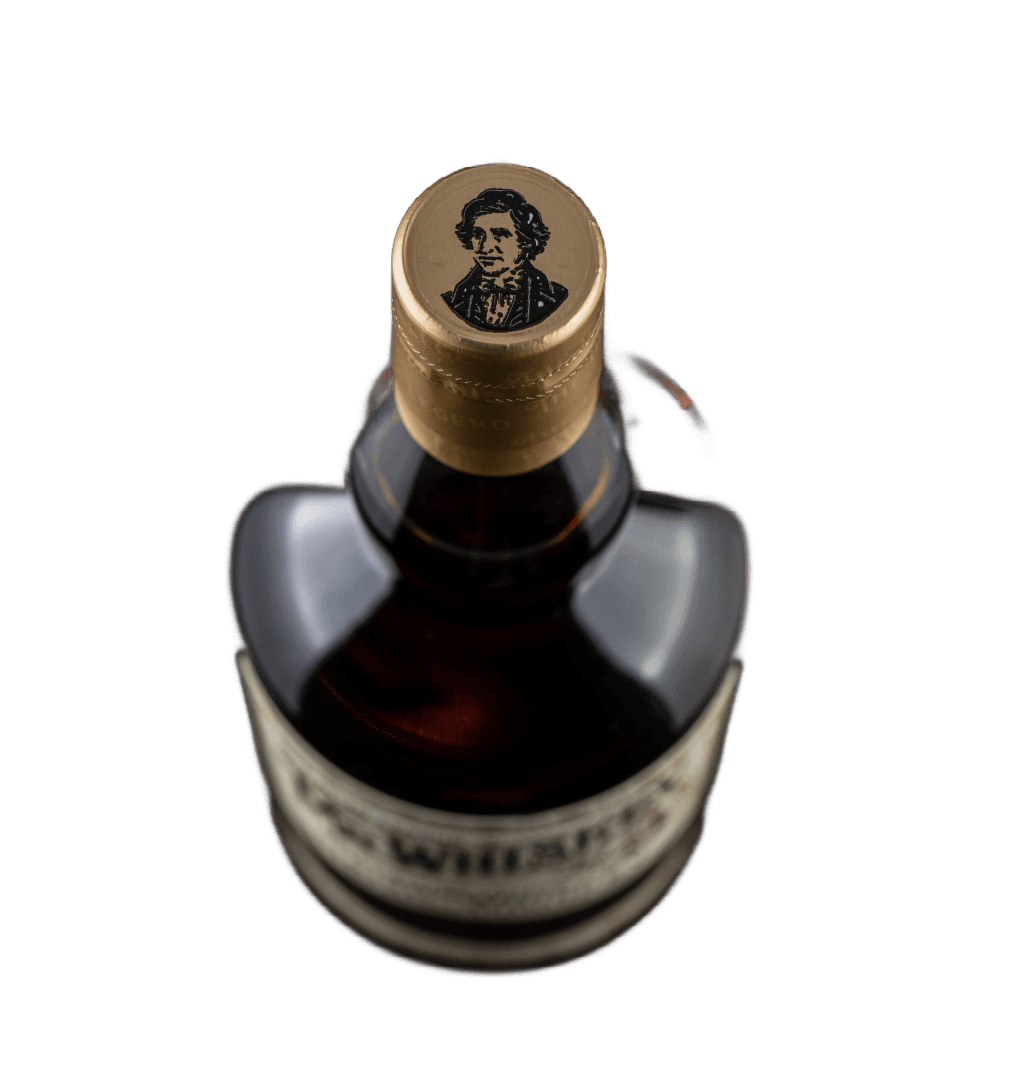
Whisky has a well-earned relationship with the natural cork T-top stopper. The tactile ritual of gripping a wooden head and hearing the pull of the cork is part of what whisky drinkers value - and industry packaging specialists consistently confirm that at the premium end, a weighted bartop stopper signals quality in a way that other closures do not.
That said, natural cork carries trade-offs distillers should not ignore:
TCA contamination (cork taint) is rare but real
Cork can dry out if bottles are stored on their side, loosening the seal over time
Natural cork introduces variability in oxygen transmission between bottles
This is where micro-granulated (technical) cork shanks and synthetic shanks earn their place. Technical cork offers more consistent compression. Synthetic shanks eliminate TCA risk entirely and deliver a predictable, low oxygen transmission rate - important for distilleries producing at scale or exporting to markets with variable storage conditions.
For everyday expressions or high-volume blends, ROPP closures are widely used across the industry and can look premium with the right finish and capsule.
Vodka: Clean, Consistent, Functional
Vodka bottles are opened repeatedly, often at pace in bar environments. Sealing reliability and ease of reclosure matter. Vodka also does not benefit from micro-oxygenation - you want the liquid exactly as bottled, every time.
Synthetic shanks and ROPP closures both perform well here. The monostopper format has found real success in vodka: a one-piece moulded stopper in a bold colour or unusual shape can become a powerful brand signature in a crowded category. Premium vodkas have also leaned into statement T-top stoppers with resin or glass heads, creating a luxury cue that competes with fine wine aesthetics.
Gin: Expressive, Botanical, Unafraid to Experiment
Gin is arguably the most closure-experimental category in spirits today. The explosion of craft producers has created a market where differentiation is everything.
Because gin is typically consumed relatively quickly after purchase, long-term sealing performance is less critical than for whisky. This gives distillers more freedom to choose based on aesthetics and brand expression. Common approaches include:
Botanical garden aesthetics with wooden-head T-top stoppers and nature-inspired engravings
Apothecary-style brands using cork monoshanks with embossed branding
Contemporary gins using one-piece synthetic stoppers in unexpected colours or recycled materials
A bio-based PLA capsule in a botanical colour, embossed with botanicals, tells a coherent visual story from closure to label - and increasingly wins recognition at industry packaging awards.
Rum: A Category Finding Its Premium Footing
Rum is in a significant repositioning. Long associated with high-volume production - ROPP closures with minimal decoration - premium and aged rums are now competing in the same aesthetic territory as single malt whisky.
For craft and premium expressions, the T-top stopper with a natural or technical cork shank is the standard of ambition. For heritage and export-focused producers, ROPP closures remain dominant - they run well on high-speed lines, provide strong tamper evidence, and can be produced in finishes that feel deliberate and premium.
One consideration specific to rum: sugar content in some aged and flavoured variants can interact with closure liners over time. Liner specification for sweeter, lower-ABV expressions is worth discussing with your closure partner before committing to a format.
Tequila and Mezcal: Craft Heritage With Global Ambitions
At the premium and ultra-premium end, T-top stoppers with handcrafted or artisanal head materials - ceramic, hand-painted resin, agave-derived materials - have become part of the brand mythology. These are not just closures; they are collectible objects.
For mid-tier and export production, ROPP closures are the standard. They perform reliably on high-speed lines, travel well and provide the tamper evidence that export and duty-free markets demand. Mezcal, still a more artisanal category, tends toward natural cork bartop stoppers that reinforce its terroir-driven narrative.
No/Low Alcohol Spirits: The New Frontier
No/low producers face a closure challenge full-strength spirits brands do not: they need closures that signal sophistication without relying on traditional heritage cues.
Because no/low spirits are often positioned as wellness-forward and ingredient-driven, packaging tends toward clean, modern aesthetics:
One-piece monostopper formats in neutral or natural tones
GPI closures with well-designed capsules for a sleek, uncluttered look
Bio-based PLA capsules or FSC-certified wooden heads to reinforce sustainability credentials
Practical note: no/low products typically have lower ABV, which changes the interaction between the liquid and closure liner materials. Testing your formulation against your closure choice before full production is essential.
Liqueurs: Sweetness, Sugar and the Sealing Challenge
Liqueurs are one of the more technically demanding categories for closure selection. The combination of lower ABV, higher sugar content and flavour compounds creates a different chemical environment than a straight spirit.
T-top stoppers work well for premium and craft liqueurs, but cork sizing and tolerances matter more here - liqueur residue on the shank can make re-insertion difficult. ROPP closures are widely used for mainstream liqueurs: they seal consistently, run at speed, and the large decorative surface area is a genuine advantage for colourful, expressive brands. Combined with a printed or embossed polylaminate capsule, the result can be visually striking.
Fortified Wines: Tradition With Technical Demands
Fortified wines sit in a unique position. Traditional T-top stoppers with natural cork shanks are the classic choice for vintage ports and premium sherries - the natural cork allows controlled oxygen exchange relevant for styles that evolve over time, and the ceremonial opening experience is part of the product.
For younger, everyday expressions - particularly Vermouth and aperitif-style fortifieds - ROPP closures are now standard. They reseal cleanly (important for products consumed across multiple occasions) and look premium with the right capsule. Tin capsules carry a long aesthetic tradition in fortified wine; polylaminate capsules with hot foil can replicate that premium look at a lower cost point.
How to Actually Decide: Four Questions Worth Asking
Where does this product sit in the market? Premium and luxury spirits almost always benefit from a T-top stopper with a natural, micro or synthetic cork shank. For accessible or high-volume expressions, ROPP and GPI closures can perform and look excellent.
What does your bottling line look like? ROPP requires specific capping equipment and precise bottle neck specifications. T-top stoppers need the right bore diameter and shank sizing. These conversations should happen early - not after you have committed to a bottle shape.
How long will the liquid be in the bottle before it is opened? Long-term cellaring favours natural cork for certain categories. Products consumed quickly can use synthetic or ROPP closures without compromise.
What story does this closure need to tell? A wooden-head T-top says something different to a coloured resin monostopper, which says something different to a matte ROPP cap. The closure is the first physical expression of your brand in the consumer's hand. Make it deliberate.
Work With Bostocap
At Bostocap, we work with distilleries at every scale - from small-batch craft producers to large international brands - to design closures that protect your liquid, suit your bottling process, and communicate exactly the right thing about your spirit.
Whether you are starting from scratch or revisiting an existing closure, we are happy to have that conversation.
More insights

Sustainability & Regulations
Sugarcane Bio PE Shanks Explained: A Distiller’s Guide to Green Synthetic Stoppers
Sugarcane-based Bio PE offers distillers a lower-carbon synthetic stopper without changing performance, decoration options or recyclability. Here’s what it is, how it works and where its limits sit.

Sustainability & Regulations
Sustainable Closures for Spirits: What the Words Actually Mean - and What to Ask Your Supplier
Renewable, bio-based, compostable, recyclable - sustainability language is everywhere in spirits packaging. Here's what those words actually mean for your closures, and how to make choices you can stand behind.
Need guidance on your closure project?
Bostocap helps spirits brands choose, refine and develop closure solutions that balance technical performance, premium perception and brand coherence.