7 min read
Written by
Published the
Introduction
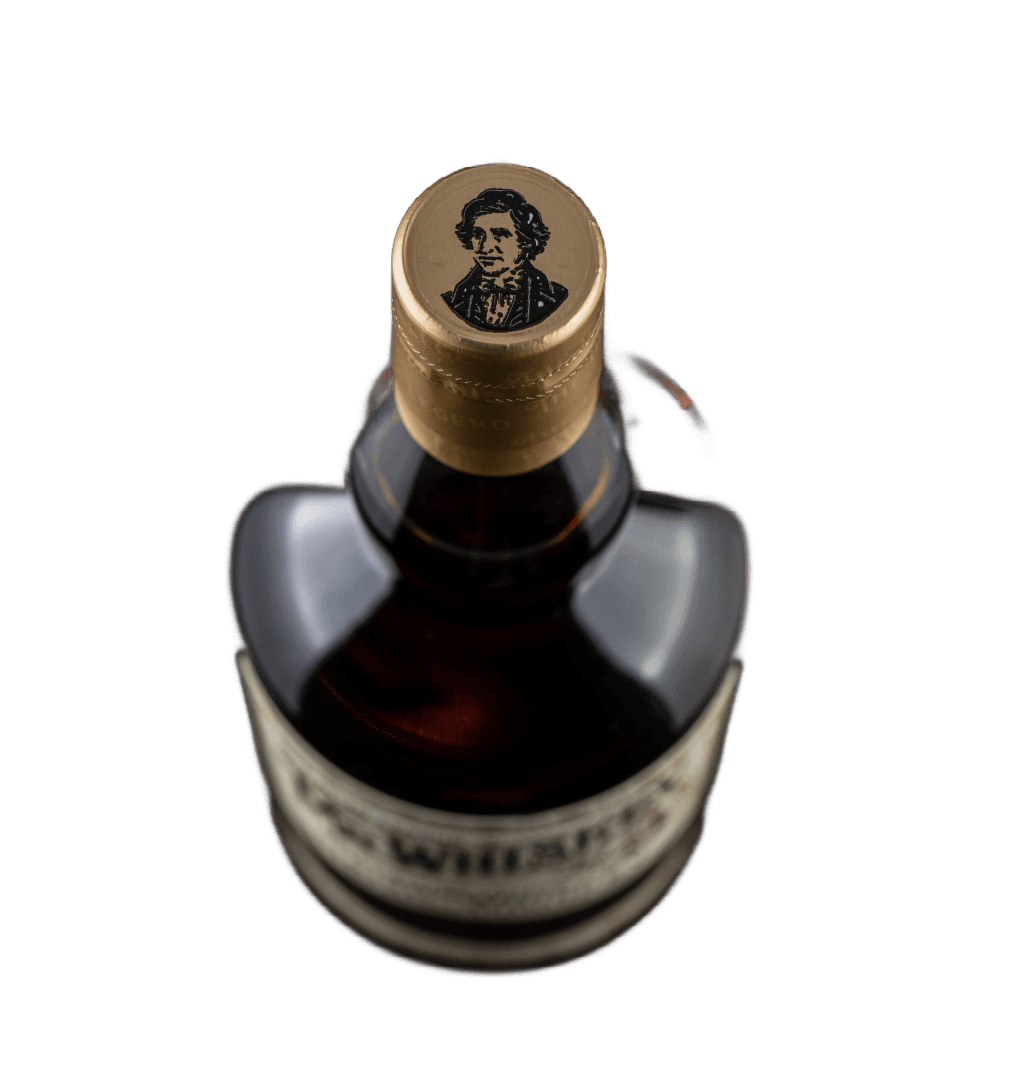
Walk into any well-stocked spirits retailer and you'll understand within seconds why closures matter. Before anyone reads a label, checks an ABV or asks the price, they look at the top of the bottle. That moment - the first encounter with your stopper - is a brand statement that happens in less than two seconds and says more than most marketing copy ever will.
For too many distilleries, the stopper decision gets made late, on a tight deadline, by comparing three or four standard options in a catalogue. The result is a closure that does its functional job perfectly well and its branding job barely at all.
It doesn't have to work that way. The head of a T-top stopper is one of the few elements of your packaging where imagination genuinely has no ceiling. The shank - the part that goes into the bottle - has to seal, has to fit, has to perform technically. That's where engineering takes over. But above the bottle neck? That's yours. And at Bostocap, helping distillers figure out exactly what to do with that space is one of our favourite conversations.
The Two-Part Logic: Engineering Below, Imagination Above
A T-top stopper has two distinct jobs, and it helps to think about them separately.
The shank - the cylindrical body that goes into the bottle neck - is a technical problem. It needs to create a reliable seal against the spirit, withstand the pressure variations of transport and temperature change, and run cleanly on your bottling line without causing jams or inconsistencies. Natural cork, micro-granulated cork and synthetic cork each offer different characteristics in terms of oxygen transmission rate, compression, TCA risk and compatibility with specific spirits. This part of the decision is about matching the shank to your liquid, your bottle, and your production setup.
The head is a creative problem. It has no sealing function. It faces upward on the shelf, it's the first thing a customer reaches for, and it spends the life of the bottle being seen, touched, photographed, and in some cases kept long after the spirit is gone. That means the head can be almost anything - and increasingly, the most distinctive spirits brands are treating it as exactly that.
The Material Defines the Message
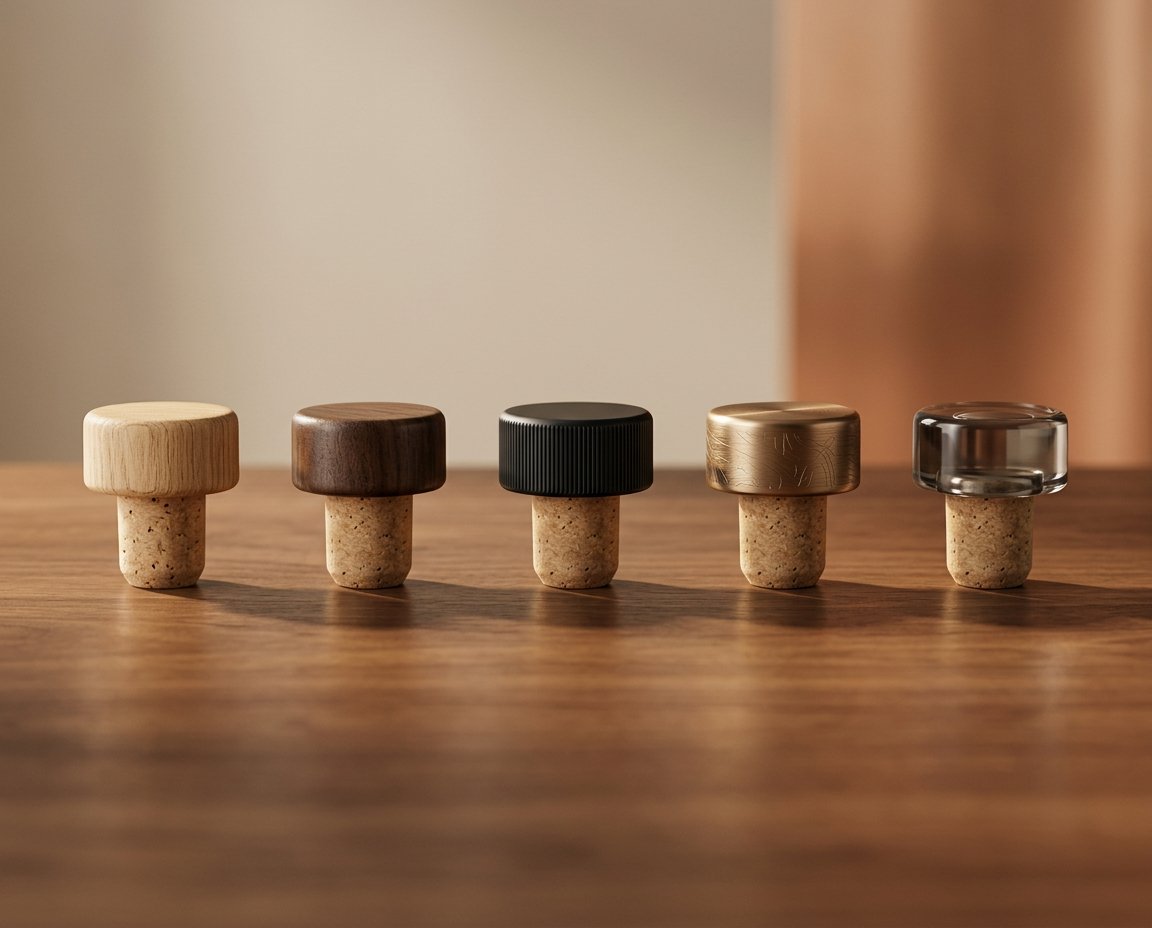
The choice of head material is not a technical decision. It's a brand positioning decision. Each material has its own weight, temperature, texture, light behaviour and cost profile - and each sends a different signal before a word has been read.
Wood
Still the most widely used premium head material, and for good reason. Wood is warm to the touch, natural-looking, and carries strong associations with craft, heritage, and the barrel-ageing story that many spirits love to tell. It can be stained, lacquered, hand-oiled, laser-engraved, debossed with logos, or shaped into unusual profiles. Oak, walnut, rosewood and bamboo each carry different visual and textural personalities. A dark-stained oak head reads very differently from a light ash one.
Resin
Resin opens up a vast range of colours and translucency effects that wood and metal cannot match. It can be cast in virtually any shape, injected with colours, marbled, made opaque or crystal clear, and finished matte or high gloss. Resin heads often carry logos in relief or inlaid coin inserts, and they perform consistently across large production runs. They're particularly strong for gin and vodka brands that want bold colour as part of their identity.
Zamak (Zinc Alloy)
Zamak is the material that brings real weight and gravitas to a stopper. It's a zinc alloy - dense, smooth to cast, and capable of holding extremely fine surface detail through the casting process. A zamak head has the heft of metal without the cost of silver or gold, and it can be plated in virtually any metallic finish: polished chrome, antique copper, brushed gunmetal, matte black, aged bronze. The weight alone - that satisfying heaviness as you grip and pull - communicates premium quality in a way lighter materials simply cannot. Zamak is particularly popular for aged whiskies, premium tequilas and super-premium rums where the closure needs to command the same respect as the liquid.
Ceramic
Ceramic stoppers are increasingly found at the very top of the market - typically for limited editions, collector bottles, or spirits tied to a specific place or cultural heritage. A ceramic head can be hand-glazed, painted, relief-sculpted, or produced in heritage craft traditions specific to a region. In 2024, standout spirits packaging award winners used handmade black gloss ceramic bottles with chrome stoppers, and hand-glazed ceramics painted to reflect the organic forms of agave plants. The message is unmistakable: this is not a mass-produced product. For distilleries releasing small-batch expressions at elevated price points, ceramic transforms the stopper into an artwork.
Glass
A glass head catches light in ways no other material does. Clear, coloured, frosted or blown - glass stoppers have a jewellery-like quality that reads as ultra-premium, particularly for clear spirits like vodka or gin where the bottle itself is part of the visual story. A globe of hand-blown glass over a cork shank can make a bottle look like something found in a craft atelier rather than a production line.
Aluminium
Lighter than zamak, highly customisable in colour and finish, and excellent for engraving and embossing. Aluminium heads offer a clean, modern aesthetic that works particularly well for contemporary brands that want a premium feel without the weight or cost of zamak. Anodising opens up strong, durable colours with a metallic base - matte black aluminium with a laser-engraved logo is a combination that photographs exceptionally well.
Shape: Where Brands Become Icons
The shape of a stopper head is arguably its most powerful differentiating factor. Once customers associate a particular shape with your brand, the stopper becomes a recognition device that works independently of any label or packaging - recognisable in photographs, on a backbar, and in a gift box.
Standard cylindrical and dome shapes are the starting point, and there are good reasons why they're common: they're clean, they stack well, they're easy to grip, and they don't add unnecessary cost.
Beyond standard, the options span a remarkable range:
Geometric and faceted shapes - hexagons, pyramids, cubes, diamonds - that catch light and look architectural
Figurative objects - animals, skulls, crowns, anchors, chess pieces, knives, tools - that tell a story or connect to brand mythology
Sculptural and organic forms - waves, flames, botanical elements, abstract curves - that feel handcrafted even in production
Sport and culture references - footballs, guitars, globes - for brands with specific community or lifestyle connections
Brand-specific silhouettes - a stopper shaped like the distillery's still, a regional landmark, or the signature of the founder
The best stopper shapes are functional enough to be gripped comfortably and distinctive enough to be immediately recognisable. Some of the most successful ones are also collectable - customers keep them, display them, and talk about them long after the bottle is empty. That is brand marketing that continues to work for free, long after the purchase.
Surface, Texture and Finish: The Details That Define Quality
Beyond material and shape, the surface treatment of a stopper head is where perceived quality is made or lost. Two stoppers of the same shape and material can read as entirely different price tiers depending on how their surfaces are finished.
Embossing and Debossing
Raising or recessing your logo, a motif, or text into the surface of the head adds tactile depth that customers feel before they see. A debossed logo on a zamak head, or embossed botanical detail on a resin stopper, communicates intentionality. Someone cared enough to tool this.
Laser Engraving
Laser engraving on wood or aluminium produces extraordinarily fine detail - fine enough for full illustrated scenes, maps, or handwriting-style text. It has a precision and permanence that printed decoration cannot match.
Colour and Finish
Matte versus gloss is one of the most immediately read quality signals in premium packaging. Matte surfaces - across resin, zamak, wood or aluminium - read as contemporary, understated and expensive. High-gloss finishes communicate boldness and confidence. Soft-touch lacquer finishes - which give a velvety, suede-like sensation when handled - are increasingly used on premium packaging because the tactile experience alone elevates the perceived price point.
Metallic Plating and Special Effects
Zamak and aluminium heads can be electroplated in chrome, gold, copper, rose gold, antique brass, or gunmetal. Combined with a matte or brushed surface treatment, these finishes can make a stopper look like bespoke jewellery. Two-tone treatments - for example, a matte black body with a polished gold inset element - add visual complexity that reads as craftsmanship.
Side Branding and Coin Inserts
Coins or medallions inserted into the top or side of a stopper head allow a brand's crest, logo, or signature motif to be presented as a distinct, finished object within the stopper - almost like a wax seal or signet ring. This technique is particularly effective for whisky brands with a coat of arms, heritage crest, or family emblem. A coin insert also solves the problem of branding a non-flat surface: instead of trying to print or engrave on a curved or irregular form, you insert a perfectly flat, precisely detailed element.
NFC Technology: When the Stopper Becomes a Portal
One of the most significant developments in spirits packaging in recent years is the integration of NFC (Near Field Communication) technology into closures. The concept is simple: a small chip is embedded in the stopper head or capsule, invisible from the outside, which activates when a smartphone is held close to it.
What happens next is entirely up to the brand.
Connected bottle technology with NFC integration in its capsule can offer product authentication, opening detection, and a consumer engagement programme - all triggered by a single tap of a smartphone. The technology uses the same encryption level as electronic passports, making it genuinely secure rather than merely decorative.
For distilleries, the practical applications range from the protective to the experiential:
Authentication and anti-counterfeiting: confirm the bottle is genuine and has not been opened or tampered with
Digital storytelling: tap the stopper to access a film of the distillery, a message from the distiller, or the story behind this specific batch
Batch traceability: link each bottle to its cask number, distillation date, and tasting notes
Consumer engagement: loyalty rewards, cocktail recipes, event invitations, or exclusive content for bottle owners
Limited edition activation: number-specific content - each of 500 bottles triggers different content based on its unique identifier
The tap-to-reveal interaction is not a novelty. For a growing number of buyers, it's becoming an expectation.
NFC chips add minimal cost to a closure and are invisible in use. They work natively on both iOS and Android without any app download required. And once integrated into a stopper at Bostocap, the content they deliver can be updated remotely at any time - meaning a single physical closure can tell different stories at different stages of a product's life.
Beyond the Stopper: The Complete Unboxing Story
A stopper doesn't exist in isolation. It's the uppermost element of a bottle that - for many premium and gift-market spirits - will arrive in a box. And the box has its own story to tell.
At Bostocap, we work with distilleries not just on stoppers and capsules but on the complete presentation experience: from the closure at the top of the bottle to the gift box it sits in. This matters because the unboxing moment - opening the box, lifting a lid, seeing the bottle for the first time in context - is when gift-market spirits create their strongest emotional impression. A beautifully designed stopper inside a carelessly chosen box is a missed opportunity. A stopper and box that work together as a system is a gift that people remember.
Our gift box offering ranges from standard folded structures with custom print and colour, to bespoke rigid boxes with magnetic closures, anti-scratch quadri-colour print, hot foil finishes, and premium foam or velvet inserts shaped precisely to the bottle. The box can carry the same visual language as the stopper - matching metallic finishes, the same embossed motif, the same colour palette - so that everything the customer touches and sees belongs to a single, intentional design.
We discuss gift box design as part of the same creative conversation as the stopper. Because the best packaging tells one story, not several.
How the Conversation Works
Most of the distilleries we work with come to us at one of two stages: they have a brand direction but no closure design, or they have an existing closure they want to evolve. Either is a good starting point.
What we ask at the beginning is not 'what shape do you want?' but rather: what does this bottle need to feel like in someone's hand? What does your brand stand for that isn't yet visible in your packaging? Who is buying this - and what impression should they have before they've tasted a drop?
From there, we bring material samples, reference objects, and shape sketches to the conversation. We talk through what's technically required from the shank for your specific bottle and liquid. And then we work upward from the neck: exploring head materials, surface treatments, finishing options, and any technology integrations - NFC, coin inserts, 3D-printed prototypes - that might serve the story.
The shank has to do its job perfectly. Above the bottle neck, the sky genuinely is the limit.
Start the Conversation
If you're working on a new expression, a rebrand, or a limited edition and the stopper hasn't had the attention it deserves yet - let's talk. Bring your brand story, your bottle specs, and your ambitions. We'll bring everything else.
More insights

Sustainability & Regulations
Sugarcane Bio PE Shanks Explained: A Distiller’s Guide to Green Synthetic Stoppers
Sugarcane-based Bio PE offers distillers a lower-carbon synthetic stopper without changing performance, decoration options or recyclability. Here’s what it is, how it works and where its limits sit.

Sustainability & Regulations
Sustainable Closures for Spirits: What the Words Actually Mean - and What to Ask Your Supplier
Renewable, bio-based, compostable, recyclable - sustainability language is everywhere in spirits packaging. Here's what those words actually mean for your closures, and how to make choices you can stand behind.
Need guidance on your closure project?
Bostocap helps spirits brands choose, refine and develop closure solutions that balance technical performance, premium perception and brand coherence.